Pick up a can of ZYN and read the label. You’ll see a nicotine content, a flavor name, and a compliance disclaimer. What you won’t see is a complete ingredient list with an explanation of what each component does, why it’s there, and what the evidence says about 30-minute daily buccal membrane exposure to all of it combined.
That information exists. It’s just scattered across patent filings, pharmacokinetic studies, and FDA submission documents that nobody reads. This post consolidates it.
This isn’t an anti-pouch piece. It’s an evidence-based breakdown for adults who want to know what they’re putting in their mouths — which is a reasonable thing to want.
The Two Parts of Every Pouch
Before the ingredient list, a structural point that matters for the microplastics question later: every nicotine pouch has two distinct components.
The fill — the powder or granule mixture inside the pouch that contains nicotine and most of the other ingredients.
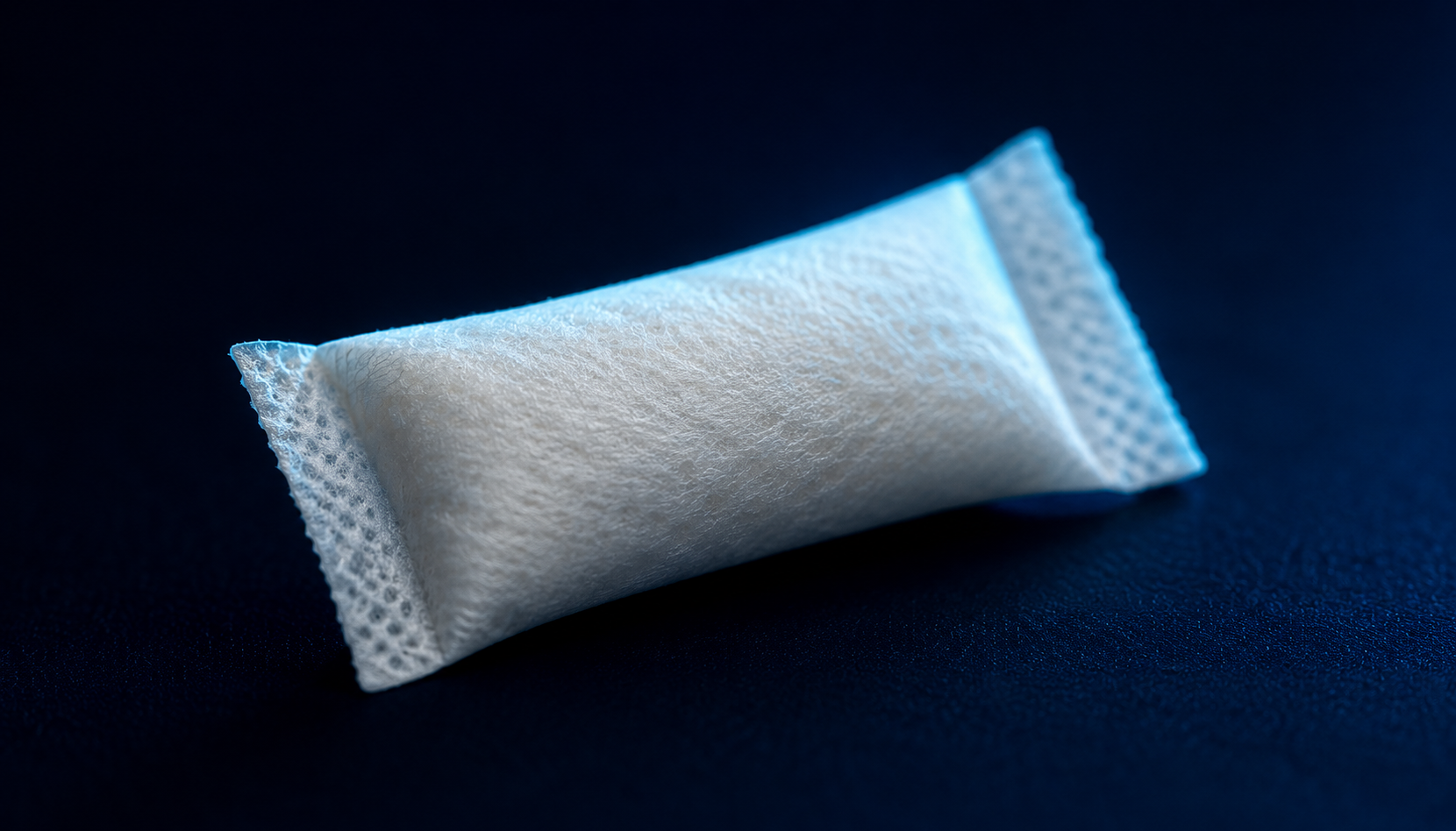
The membrane — the small white fabric pouch itself that holds the fill and sits against your gum tissue.
These two parts have different material compositions and different safety considerations. Most ingredient discussions focus entirely on the fill and ignore the membrane. That’s the gap this post addresses.
The Fill: What’s Actually Inside
Nicotine
The active ingredient. Depending on the brand, this is either:
- Tobacco-derived nicotine — extracted from tobacco leaf, purified to pharmaceutical grade. ZYN uses nicotine bitartrate dihydrate, a nicotine salt form that improves stability and controls release rate. Despite being derived from tobacco, the final product contains no tobacco leaf material.
- Synthetic nicotine — laboratory-produced, chemically identical to tobacco-derived nicotine. Some newer brands use this to sidestep certain regulatory classifications, though the FDA has clarified that synthetic nicotine products are still subject to its authority.
Both forms are pharmacologically identical. The distinction is regulatory and sourcing, not functional.
Microcrystalline Cellulose (MCC)
The bulk filler. MCC is derived from wood pulp — a highly refined plant fiber widely used in pharmaceuticals and food products. It holds GRAS (Generally Recognized As Safe) status from the FDA and is the primary structural filler in most nicotine pouches including ZYN.
MCC gives the pouch its shape, provides the moisture-holding matrix that controls nicotine release, and creates the physical bulk that makes the pouch feel substantive under the lip. It’s one of the more benign ingredients in the formulation.
pH Adjusters: Sodium Carbonate and Sodium Bicarbonate
This is one of the most important ingredients in the formulation — and the least discussed outside of technical literature.
Nicotine absorption through the buccal mucosa depends heavily on pH. In acidic environments, nicotine is ionized and crosses cell membranes poorly. In alkaline environments, more nicotine exists as free base, which crosses membranes efficiently.
pH adjusters raise the alkalinity of the pouch environment specifically to improve nicotine absorption. Sodium carbonate and sodium bicarbonate are the most common agents used — the same principle behind nicotine gum’s pH optimization.
The practical implication: the “strength” of a pouch isn’t just about labeled nicotine content. Two pouches with identical nicotine content but different pH adjusters will deliver different absorbed doses. This is part of why the labeled-dose-vs-absorbed-dose gap exists — a 3mg pouch from one brand may deliver meaningfully more nicotine than a 3mg pouch from another.
Hydroxypropyl Cellulose (HPC)
A binding agent that maintains moisture and texture during use. HPC keeps the pouch from drying out and controls the rate at which the fill releases its contents into saliva. Widely used in pharmaceutical tablets — well-characterized safety profile with no concerns at these exposure levels.
Sweeteners: Acesulfame Potassium and Sucralose
Most pouches use one or both of these zero-calorie sweeteners to make the product palatable. Both are approved food additives with extensive safety data — in the context of food consumption.
The relevant question for pouches is slightly different: these compounds are in direct contact with oral mucosa for 20–45 minutes per use, potentially multiple times daily. The research on chronic buccal membrane exposure to acesulfame K and sucralose specifically is thinner than the food ingestion literature.
The available data doesn’t raise red flags, but it’s worth noting that the safety characterization is primarily for swallowing, not prolonged mucosal contact. This isn’t a definitive concern — it’s an honest characterization of the evidence base.
Acesulfame K also degrades very slowly, which is one reason nicotine pouches are not fully biodegradable.
Preservatives: Potassium Sorbate
Used to prevent mold and bacterial growth in the moist pouch environment. Standard food-grade preservative with a well-established safety profile. No specific concerns at pouch exposure levels.
Flavorings
This is the least transparent category. “Flavoring” on a nicotine pouch label covers a potentially broad range of compounds — natural flavors, artificial flavors, menthol, cooling agents, and proprietary blends — without itemization.
Menthol is the most studied flavoring in this context. It has a mild topical anesthetic effect on mucosal tissue and slightly increases nicotine absorption by modulating buccal membrane permeability — a real pharmacokinetic effect, not just a sensory one. Menthol pouches deliver a measurably different absorbed dose than unflavored equivalents at the same labeled strength.
Synthetic cooling agents are increasingly used in “flavor-ban approved” products as menthol alternatives. A 2025 paper in Tobacco Control examined these compounds specifically and found they produce similar sensory effects to menthol while sitting in a regulatory gray zone. Long-term oral mucosal exposure data for these compounds is limited.
“Natural flavors” is a catch-all designation covering compounds derived from natural sources that can include complex mixtures. Individual components aren’t disclosed on labels.
The honest summary: flavoring is where ingredient transparency is lowest and independent safety data for chronic buccal exposure is thinnest. This doesn’t mean these ingredients are dangerous — it means they’re the part of the formulation with the least rigorous independent scrutiny for this specific use pattern.
The Membrane: The Question Nobody Answers Directly
The pouch membrane — the small white fabric bag that holds the fill — is where the microplastics question lives. And it’s where the industry is most evasive.
What Pouch Membranes Are Made Of
There are three material categories used across the industry:
Cellulose-based nonwoven fabric — derived from wood pulp or plant fibers. Organic, not synthetic. This is the material most brands point to when they say their pouches don’t contain microplastics.
Viscose (rayon) — a semi-synthetic fiber made from cellulose that has been chemically processed. Technically plant-derived, but the processing introduces synthetic chemistry. Classified differently depending on which regulatory framework applies.
Synthetic polymer blends — polyethylene (PE), polypropylene (PP), or polyester (PET) fibers, either alone or blended with cellulose. These are unambiguously synthetic and will shed microfibers in a warm, wet oral environment.
The problem: most brands don’t specify which membrane material they use. When pressed, companies typically say “plant-based fibers” or “food-grade nonwoven material” — descriptions that technically include pure cellulose but don’t exclude synthetic blends.
What the Research Shows
A Danish Environmental Protection Agency report flagged nicotine pouches as a plastic waste concern, noting that pouch material resists decomposition similarly to cigarette filters — themselves a documented microplastic source.
Independent environmental analysis found that pouch membrane fibers exposed to warm, slightly acidic conditions consistent with the oral environment showed accelerated fiber shedding compared to dry storage. Longer dwell time increases potential microfiber exposure.
Pouch industry advocates argue there is “no evidence” of microplastics, pointing to the cellulose-based composition of brands they tested. This is accurate for brands using pure cellulose membranes — but the claim doesn’t extend cleanly across the entire market, where membrane composition varies and isn’t always disclosed.
The Honest Assessment
For ZYN specifically: Swedish Match characterizes the membrane as plant-fiber based, and the fill uses microcrystalline cellulose. The available evidence does not suggest ZYN is a significant microplastic source.
For the broader market: membrane composition varies, is frequently undisclosed, and the independent testing necessary to make categorical statements about every product hasn’t been done. “Our products use plant-based materials” is not the same as a third-party verified fiber composition analysis.
If this is a concern, the practical steps are straightforward: use shorter dwell times (the 20–30 minute window is pharmacokinetically optimal anyway), favor brands with explicit membrane material disclosures, and recognize that absolute exposure — even worst case — is likely low compared to ambient microplastic exposure from food, water, and air.
What’s Not In Pouches
Tobacco leaf — no. All major nicotine pouch brands are tobacco-leaf free. The nicotine is extracted, purified, or synthesized before inclusion. This is a genuine and meaningful distinction from snus and other oral tobacco products.
Sugar — no. Sweetness comes from acesulfame K and/or sucralose. No fermentable substrate means no cavity-causing bacterial fuel — a real oral health advantage over sugared products.
Formaldehyde, nitrosamines, and combustion byproducts — not applicable. These are products of tobacco combustion. Without combustion, this class of carcinogen is absent. This is the core harm reduction argument for pouches over cigarettes.
Diacetyl — not documented in nicotine pouches. This is the flavoring compound associated with “popcorn lung” in certain vaping products. It’s not a typical ingredient in pouch formulations.
The Transparency Gap
The ingredient picture that emerges is mixed. The fill ingredients are reasonably well-characterized and largely uncontroversial at the exposure levels in question. The flavoring category has limited independent safety data for chronic mucosal contact. The membrane material is inconsistently disclosed across the industry.
Vendors who say “our pouches are safe, plant-based, and transparent” are mostly right about the fill. They’re less forthcoming about membrane composition, and the flavoring characterization relies heavily on food-ingestion data rather than buccal exposure data.
None of this constitutes a definitive health concern for the adult making an informed choice. It does constitute an information gap that adult users deserve to know exists — and that most pouch content online doesn’t acknowledge.
What This Means Practically
- Shorter dwell time reduces contact duration with all non-nicotine ingredients including the membrane. 20–30 minutes is optimal for absorption anyway — you’re not leaving value on the table by removing it earlier.
- Menthol and flavored pouches deliver slightly more nicotine than unflavored equivalents due to menthol’s absorption effect. Factor that into your dose if you’re calibrating for cognitive performance.
- Rotate placement to reduce localized exposure to pH adjusters, which are alkaline enough to irritate tissue with sustained contact in one spot.
- Choose brands with explicit membrane disclosures if microplastics are a specific concern for you.
The nicotine is the part of the formulation with the most research behind it. The rest of what’s in the pouch deserves the same scrutiny — and is only now starting to get it.
Educational purposes only. Not medical advice. Nicotine is addictive. For adults 21+ only. Consult your healthcare provider before making any changes to your nicotine use.