
Nicotine has a focus problem — not with focus itself, but with how it’s discussed. Anti-tobacco advocates conflate nicotine with cigarettes and dismiss any cognitive benefit. Biohacking communities treat it like a limitless pill with no downsides. The peer-reviewed research sits somewhere far more interesting than either camp suggests.
This is the foundation piece: what the science actually shows, and the dosing detail the market doesn’t want you thinking about.
What the Research Shows
Studies on nicotine’s cognitive effects have been accumulating since the 1980s. A consistent finding across multiple trials: low-dose nicotine improves attention, reaction time, and fine motor performance in both smokers and non-smokers.
A frequently cited meta-analysis reviewing data from over 978 participants found:
- 37% improvement in attention tasks compared to placebo
- 89% of participants showed improved fine motor skills
- Effects were most pronounced in tasks requiring sustained concentration
These are not trivial numbers. Many prescription cognitive enhancers show smaller effect sizes in healthy adults.
The Dose Problem Nobody Talks About
Here’s where the research gets inconvenient for the nicotine industry.
The cognitive benefits documented in studies consistently appear at 1–2mg of nicotine. At this dose range, attention improves, anxiety stays flat or decreases slightly, and there’s minimal cardiovascular impact.
Above 2mg, the picture changes. Anxiety increases. Heart rate rises. The performance gains plateau or reverse. The sweet spot is narrow — and most products on the market blow past it entirely.
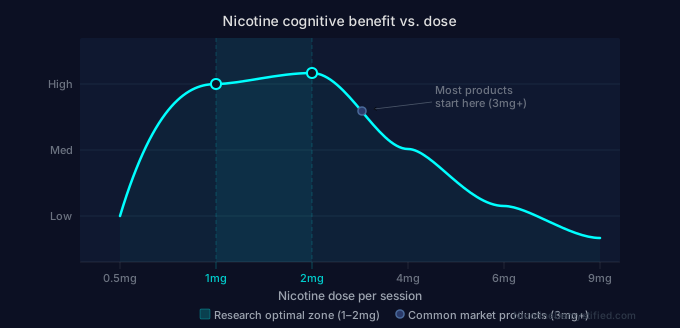
A standard ZYN pouch contains 3mg or 6mg. Many popular brands offer 9mg. The market has optimized for the nicotine hit — the sensation of satisfaction — not for the cognitive dose the research supports.
This means most people using nicotine for focus are likely:
- Using 3–5x more nicotine than the research-optimal dose
- Getting more anxiety and craving than cognitive benefit
- Building tolerance faster, requiring escalating doses over time
For a product-level look at exactly how this plays out, see our evidence-based ZYN review.
How Nicotine Affects the Brain
Nicotine binds to nicotinic acetylcholine receptors (nAChRs), triggering release of dopamine, norepinephrine, and acetylcholine — the neurotransmitters most directly involved in attention, working memory, and signal processing.
At low doses, this activation is targeted and relatively clean. At higher doses, the flood of neurotransmitter activity creates the familiar nicotine buzz — which feels like focus but is physiologically closer to stimulant overstimulation. It’s the difference between one cup of coffee sharpening your thinking and three cups making you jittery and scattered.
If you want to understand how this mechanism compares to caffeine’s completely different pathway, Nicotine vs. Caffeine for Focus covers that in detail.
Delivery Method Matters Too
Not all nicotine is absorbed the same way. Cigarettes deliver nicotine rapidly, creating sharp spikes that drive addiction. Patches deliver slowly and steadily — the gradual curve reduces craving without a satisfying hit, which is why they’re used for cessation rather than performance.
Nicotine pouches sit in the middle. Absorption through oral mucosa is slower than smoking but faster than patches. For cognitive use, slower and lower tends to outperform faster and higher — another reason the research-optimal approach diverges from how most products are marketed.
Practical Takeaways From the Research
If you’re using nicotine for focus, the research suggests:
- Dose: Target 1–2mg per session, not 4–6mg
- Frequency: Most studies showing benefits used nicotine intermittently, not continuously
- Timing: Cognitive tasks benefit most when nicotine is taken 15–20 minutes beforehand
- Tolerance: Regular high-dose use builds tolerance quickly; benefits diminish fast
Finding a 1–2mg product is harder than it should be given that this is what the research supports. The market has moved toward higher doses because they drive stronger sensation and repeat purchase — not because they’re more effective for cognition.
One More Option: Stacking With Caffeine
Many serious optimizers don’t use nicotine alone. The combination of nicotine and caffeine has its own research basis — and its own dose problems. If you’re curious about that angle, the research behind Alex Hormozi’s caffeine + nicotine stack is worth reading next.
The Bottom Line
Nicotine has genuine, documented cognitive benefits at the right dose. The problem is that the products most people use deliver far more than the studies show is optimal — which means more side effects, faster tolerance, and less of the actual benefit people are looking for.
The gap between what the research recommends and what the market sells is the entire reason this site exists.
This article is for educational purposes only. Nicotine is addictive. Not medical advice. Must be 21+. Consult your healthcare provider before using any nicotine product.